Gentle Stretches for Postpartum Recovery
The postpartum body is doing a lot at once. Muscles feel tight from feeding positions, sleep comes in short pieces, and the core and pelvic floor are recovering from pregnancy and birth. Gentle movement can help you reconnect with your body without asking too much of it.
This guide offers calm, simple stretches that can support early mobility, ease common tension, and help you feel a little more comfortable day to day. It is not a replacement for medical care. If you had a C-section, significant tearing, pelvic pain, heaviness, dizziness, bleeding that increases with activity, or any concern about healing, check with your doctor, midwife, nurse practitioner, or a pelvic health physiotherapist before starting.
The goal is not to “bounce back.” The goal is to breathe, release tension, and rebuild trust in your body one gentle movement at a time.

Start with safety and a slower pace
Postpartum recovery does not follow one neat timeline. A person who had an uncomplicated vaginal birth may feel ready for gentle stretching within a few days. Someone recovering from a C-section, assisted birth, perineal tear, infection, or pelvic floor symptoms may need more time and more support.
A simple rule helps: stretch to comfort, not intensity. The stretch should feel mild, steady, and easy to breathe through. If you notice pulling at an incision, pelvic pressure, leaking, sharp pain, or a feeling that something is not right, stop.
Before stretching, check in with three things.
Bleeding
Light movement should not make bleeding suddenly heavier or brighter. If it does, take it as a sign to rest and contact a care provider if you are unsure.
Breath
You should be able to breathe normally. Holding your breath can increase pressure through the abdomen and pelvic floor.
Support
Use pillows, a folded blanket, a wall, a chair, or the side of the bed. Postpartum stretching is not the time to force deep ranges.
For most people, a short session works better than a long one. Try five to ten minutes, once or twice a day, especially after feeding, pumping, or babywearing. Those positions often round the shoulders and tighten the neck, chest, and upper back.
If you are in the first six weeks after birth, think of stretching as gentle mobility. Keep it slow and small. After your postpartum checkup, you can gradually add more range if your body responds well.
Use your breath to release tension first
Breathing is often the best place to begin. It calms the nervous system, helps the ribs move again, and reconnects the diaphragm, deep core, and pelvic floor. Pregnancy changes how the ribs, belly, and pelvis move. Birth and recovery add another layer. A few quiet breaths can make every stretch feel easier.
360 breathing
Lie on your side, sit supported, or recline with pillows behind your back. Place one hand on your lower ribs and one hand on your belly.
Breathe in through your nose if that feels comfortable. Let the ribs widen gently into your hands. Imagine the breath moving into the sides and back of your rib cage, not just the front of the belly.
Exhale slowly through your mouth. Let your shoulders soften. Do not pull the belly in hard. Let the exhale be quiet and complete.
Try 5 to 8 breaths.
This is not a performance exercise. If deep breathing feels uncomfortable, take smaller breaths. If lying flat feels strange or creates pressure, stay propped up.
Pelvic floor drop with breath
This is a soft release, not a strengthening move. Sit on a firm cushion or lie on your side with a pillow between your knees.
As you inhale, imagine the pelvic floor gently widening or lowering. As you exhale, let it return on its own. Avoid pushing down. The image is more like relaxing a clenched jaw than bearing down.
Try 3 to 5 breaths.
This can help if you feel guarded after delivery. If it increases pelvic heaviness or discomfort, stop and ask a pelvic health physiotherapist for guidance.
Rib and side-body reach
Sit tall on a chair or the edge of the bed. Place one hand on your ribs. Reach the other arm up only as high as comfortable. Lean slightly to the opposite side.
Breathe into the open side of your ribs. Hold for 2 to 3 slow breaths, then switch sides.
This stretch is useful because feeding, carrying, and limited sleep can leave the ribs and side body feeling stiff. Keep the reach soft. There is no need to push toward a deep side bend.

Ease neck, shoulder, and upper back tightness
Newborn care can be hard on the upper body. Feeding, bottle prep, rocking, contact naps, and checking a baby’s latch or position all encourage the same rounded posture. The neck works overtime. The chest tightens. The upper back can feel stuck.
These stretches can be done in small moments, even while sitting beside the crib or on the couch.
Shoulder rolls
Sit or stand comfortably. Let your arms rest by your sides. Roll your shoulders up, back, and down in a slow circle. Make the movement smooth rather than large.
Do 5 circles, then reverse direction.
This helps bring awareness to the shoulder blades. Many people live with their shoulders lifted toward their ears during early postpartum weeks. A few rolls can remind the body to let go.
Neck side stretch
Sit tall with both feet supported. Let your right ear move gently toward your right shoulder. Keep the left shoulder heavy. Stop when you feel a mild stretch along the side of the neck.
Hold for 2 to 3 breaths. Return to centre and switch sides.
For a softer version, place the opposite hand behind your back or hold the edge of the chair. Do not pull on your head. The weight of the head is enough.
Chin nods
This one is tiny but effective. Sit or lie supported. Look straight ahead. Nod (tuck) your chin slightly, as if saying a very small “yes.” You may feel length at the back of the neck.
Hold for one breath, then release.
Repeat 5 times.
Chin nods can feel helpful after long periods of looking down at a baby. Keep the movement small. If it feels like a throat squeeze or jaw clench, relax and try again with less effort.
Seated upper back opening
Sit on a chair or the edge of the bed. Cross your arms over your chest, hands resting on opposite shoulders. Round your upper back slightly as you exhale. Then inhale and gently lift your chest without arching hard through the low back.
Move between the two positions 5 to 8 times.
This creates easy motion through the upper spine. It should not tug at a C-section incision. If it does, make the movement smaller or skip it for now.
Doorway chest stretch
Stand in a doorway with one forearm resting on the frame, elbow lower than shoulder height. Step one foot forward. Turn your chest slightly away until you feel a light stretch across the front of the chest.
Hold for 2 to 3 breaths. Switch sides.
Keep this mild. A deep chest stretch can be too much if the front body already feels tender from nursing, pumping, or holding a baby.
Move the spine and hips without strain
The lower back and hips often feel different after pregnancy and birth. Ligaments may still feel loose for a while, the abdominal wall is healing, and sleep positions may not be ideal. Gentle movement can help, but deep twisting or aggressive hip opening can irritate symptoms for some people.
Use these stretches as a way to invite motion, not force flexibility.
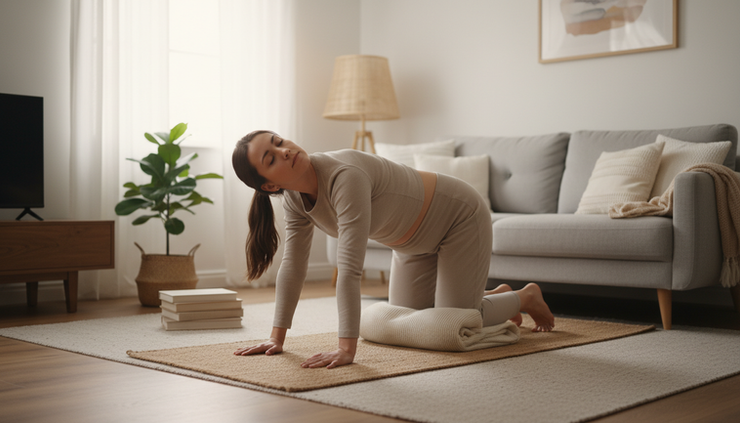
Cat-cow on hands and knees
Come to hands and knees on a mat or blanket. Place a folded towel under your knees if needed. Keep wrists under shoulders and knees under hips, or widen the knees if that feels better.
Inhale and gently let your chest move forward and your belly fall to the floor. Exhale and round your spine slightly. Keep the movement small and smooth.
Repeat 5 to 8 times.
If being on hands and knees feels uncomfortable, try the same motion seated. Place your hands on your thighs. Inhale to gently lift the chest, exhale to round the upper back.
Child’s pose with support
From hands and knees, bring your hips back toward your heels. Place a pillow or bolster under your chest. Rest your forearms on the floor or beside the pillow.
Stay for 3 to 5 breaths.
This can feel lovely for the back, but it is not comfortable for everyone. If you had a C-section or feel pressure in the pelvis, keep your knees wider, place more pillows under your torso, or skip it.
Seated figure four stretch
Sit on a sturdy chair with both feet flat. Cross your right ankle over your left thigh. Keep the right foot flexed. Sit tall and hinge slightly forward until you feel a mild stretch in the outer hip.
Hold for 2 to 3 breaths. Switch sides.
Avoid pressing the knee down. The hip should decide the range. If this creates pelvic discomfort, try lying on your side and gently moving the top knee open and closed instead.
Hip flexor stretch with support
Stand beside a wall or chair. Step one foot back into a short lunge. Keep both hip points facing forward. Bend the front knee slightly and gently tuck the pelvis, as if bringing the front of the hip bones and ribs a little closer together.
You may feel a stretch at the front of the back hip. Hold for 2 to 3 breaths, then switch sides.
This stretch can help after lots of sitting. Keep the stance short. A long lunge can pull too strongly through the pelvis or abdomen.
Support the low back, legs, and feet
Postpartum life involves more standing and pacing than many people expect. Rocking, bouncing, swaying, laundry, bottle washing, and walking the halls at night can leave the calves, hamstrings, and feet tight.
These stretches are gentle enough to fit into daily routines.
Supported hamstring stretch
Lie on your back if comfortable, or recline with pillows. Bend both knees. Lift one leg and hold behind the thigh. Slowly straighten the knee until you feel a mild stretch along the back of the leg.
Hold for 2 to 3 breaths. Switch sides.
If lying on your back feels uncomfortable, sit on the edge of a chair. Extend one leg forward with the heel on the floor. Keep your spine long and hinge forward slightly.
Do not lock the knee. Keep the stretch easy.
Calf stretch at the wall
Stand facing a wall. Place both hands on the wall. Step one foot back, keeping the heel down and toes pointing forward. Bend the front knee slightly.
Hold for 3 breaths. Switch sides.
This stretch can feel good after walks, showering while standing, or holding a baby for long periods. Keep it light if your joints feel loose.
Foot stretch with a towel
Sit down and place a small towel under one foot. Curl your toes to scrunch the towel, then relax. After a few scrunches, gently point and flex the foot.
This is more movement than stretch, but it can wake up tired feet. Pregnancy and postpartum swelling can make the feet feel stiff, so small movements are often enough.
Reclined knee rocks
Lie on your back with knees bent, or recline with pillows. Let your knees move a few centimetres side to side. Keep the movement slow and small.
Repeat 5 to 8 times.
This is a gentle way to move the low back and pelvis. Avoid going into a deep twist early on, especially if it pulls through the abdomen or pelvic area.

Build a simple postpartum stretching routine
A routine does not need to be perfect to help. In the early weeks, the best routine is the one that can happen in real life. That might mean one stretch after a feeding or three breaths before getting into bed.
Here is a simple sequence to try when you have a quiet few minutes.
When you feel sore from feeding
When your back feels stiff
When your hips feel tight
When your legs feel heavy
Neck side stretch, shoulder rolls, doorway chest stretch
360 breathing, seated upper back opening, cat-cow
Supported child’s pose, seated figure four, hip flexor stretch
Calf stretch, supported hamstring stretch, foot movements
A short full-body option could look like this:
Take 5 slow 360 breaths.
Roll the shoulders 5 times each way.
Move through 5 seated upper back openings.
Do 5 gentle cat-cows.
Hold a supported hip flexor stretch for 2 breaths on each side.
Finish with a calf stretch at the wall.
This may take less than ten minutes. If that is too much, cut it in half. Healing bodies still benefit from small doses.
Pay attention to how you feel later in the day. A good postpartum stretch session should leave you feeling calmer or looser. It should not cause a spike in pain, pressure, fatigue, or bleeding.
There are also days when rest is the better choice. Stretching is helpful, but sleep, food, hydration, and support matter too. If your body is asking for stillness, listen.
A gentle way forward
Postpartum recovery is not a race, and stretching should never feel like a test. The most useful movements are often the smallest ones: a slower breath, a softer shoulder, a supported hip stretch, or a few easy rounds of cat-cow.
Start with comfort. Keep the range mild. Use props without apology. If symptoms feel confusing or worrying, reach out to a qualified health professional, especially one trained in pelvic health. If you are looking for a stretching program tailored to your needs or some help getting your body moving again, book in with one of our massage therapists at LoLo Wellness in North Vancouver today!
Your body has been through a major transition. Gentle, steady care is enough for today.


Comments